Building a Vessel Digital Twin: The Operational Data Method
January 1, 2026
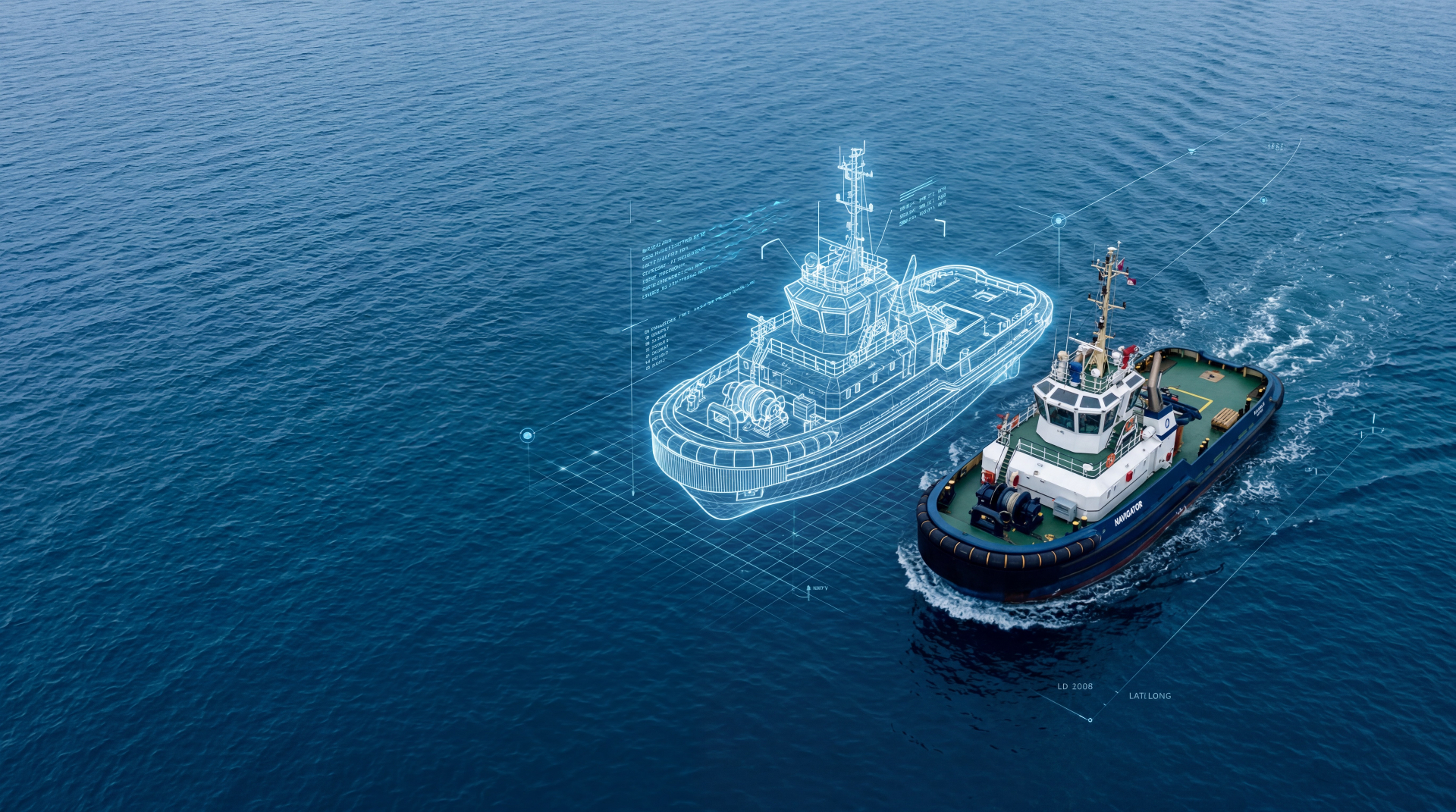
Some companies use digital twins to describe a 3D model you can visualize; others define it purely as a data construct. This makes it difficult for operators to know what a Digital Twin actually is and nearly impossible to compare solutions on equal terms.
At Cetasol, a digital twin is entirely data-driven. It is a continuously updated virtual model of how a vessel and its engine behave in real operations.
Using this model, operators can forecast operational outcomes before they occur, improve fuel decisions, and support compliance and cost forecasting.
Let’s focus on clarity and outline the practical, data-first method for building a maritime digital twin, what inputs it requires, how the model is structured, and why this approach delivers meaningful operational improvements.
What a Digital Twin Really Is in Maritime Operations
Across the industry, Digital Twin is used to describe everything from 3D ship replicas to immersive VR environments. While these visual models look impressive, they offer little value to operators focused on fuel performance, maintenance planning, or compliance. Maritime decisions are driven by data and behavior, not visuals and that is where the operational digital twin becomes meaningful.
Cetasol defines a digital twin as a functional data-driven model that continuously mirrors how a vessel and its engines behave in real operations.
It is built from authentic measurements, engine signals, GPS, power load patterns, environmental influences, and updates in real time as conditions change. Instead of recreating the vessel’s physical appearance, it reconstructs the vessel’s operational logic, enabling accurate prediction, validation, and optimization.
In classical engineering, digital twins were created by modeling each component based on design specifications. This approach is slow, expensive, and often inaccurate because real-world vessels rarely behave exactly as designed.
Cetasol reverses that process: start with actual operational data, model the relationships and dynamic responses, and continuously refine the model through real-world outcomes. This makes the twin scalable, fast to deploy, and directly tied to real vessel behavior.
A data-driven Digital Twin qualifies as such when it can:
- Replicate how the vessel responds under different operating conditions
- Compare predicted and actual outcomes in real time
- Detect deviations and explain their root causes
- Model operational responses to conditions the vessel has not yet encountered.
- Support decisions that reduce fuel use, emissions, and downtime
This is why business outcomes, not visual fidelity, define the value of a maritime Digital Twin. With a behavior-based model, operators can forecast fuel consumption, identify efficiency losses, plan maintenance based on real trends, and evaluate ‘what-if’ operational outcomes analytically before making changes onboard.
Ultimately, the Digital Twin becomes a decision tool that strengthens energy optimization, supports ESG targets, and improves the financial performance of every voyage.
Modeling Behavioral Logic to Reflect True Operational Responses
Once the structural framework of the vessel is established, the digital twin must learn how the vessel behaves in real operations. This is where behavioral logic comes in. Instead of relying on theoretical design assumptions, the model encodes the patterns, modes, and reactions the vessel demonstrates on the water.
The behavioral layer captures how the vessel accelerates, maneuvers, and settles into different speed bands. It accounts for variations in captain driving style, how quickly power is applied during mobilization, and how the vessel responds to load changes. These patterns form the foundation of realistic, data-driven predictions.
Operational modes are also integrated directly into the model. The vessel in each mode has distinct power requirements and operational rhythms. Encoding these modes ensures the digital twin reflects the unique demands and constraints of each task.
External conditions, such as wind, waves, and currents, shift the vessel’s energy profile and must be represented in the behavioral logic as well.
The digital twin learns how these factors influence fuel use and performance, allowing it to model expected operational responses under varying conditions and forecast outcomes realistically.
Adaptive AI supports this process through pattern recognition and anomaly detection. It identifies trends, flags deviations from expected behavior, and helps refine the model by informing adjustments as new data becomes available. Importantly, the AI does not control the vessel or make autonomous decisions; it assists operators by improving the accuracy and relevance of the behavioral model over time.
The Essential Data Inputs Needed to Create a Maritime Digital Twin
A digital twin is only as strong as the data that feeds it. To mirror real vessel behavior, the model must be grounded in authentic operational measurements rather than theoretical assumptions or design documentation. Cetasol’s approach prioritizes simplicity, accuracy, and minimal onboard interference.
Minimum Data Inputs: GPS and Engine Signals
The foundation of the model begins with the two essential signals available on almost every vessel:
• GPS (speed, position, timing)
• Engine signals (power output, load indicators, operational state)
These inputs alone allow the system to understand how the vessel moves, consumes energy, and responds to different operational demands. They also ensure the digital twin can be deployed quickly across diverse fleets without restructuring onboard systems.
Expanded Data Inputs for Greater Precision
When available, additional data streams are incorporated to enhance the twin’s accuracy:
- RPM
- Torque estimates
- Power load
- Speed over ground
- Environmental inputs (wind, waves, currents)
- Operational mode selections
These measurements help the twin capture more nuanced patterns, how the vessel accelerates, how it behaves under specific loads, and how conditions affect energy use.
The Role of Historical Data
Historical voyages provide critical context for pattern discovery. They reveal typical driving behaviors, recurring efficiency losses, and the ranges in which the vessel normally operates. This archive of operational behavior becomes the baseline for comparing future performance and training the model.
Non-Invasive Data Collection Through iHelm and CetaFuel
A major advantage of Cetasol’s approach is that it delivers a complete operational model of the vessel without requiring intrusive hardware or complex retrofits. Many traditional digital twin or fuel-monitoring systems depend on physical sensors, engine disassembly, or tapping directly into fuel lines, methods that increase installation time, cost, and risk. Cetasol avoids all of this.
The iHelm Intelligent Platform is designed for minimal, maritime-ready installation. The onboard CMU connects to GPS and existing engine signals, forming the minimum dataset needed to begin modeling the vessel’s operational behavior.
Additional signals can be connected if available, but they are not required for the system to function. This lightweight setup ensures that fleets can adopt digitalization without interrupting operations or modifying critical systems.
Building on the same data backbone, CetaFuel acts as a virtual fuel reader. Instead of using physical flowmeters, CetaFuel applies operational signals to estimate fuel flow virtually with 97–99.5% accuracy when the model is properly calibrated (no physical sensors required).
This is achieved through a data-driven engine model that improves its estimations as more operational measurements become available. Because it is entirely software-based, it requires:
- no cutting into fuel lines
- no installation of mechanical sensors
- no annual recalibration
- no ongoing maintenance
This makes CetaFuel a cost-efficient alternative for vessels not equipped with flowmeters and a scalable solution for fleet-wide standardization.
Together, iHelm and CetaFuel create a non-invasive, low-friction data collection ecosystem. Vessel owners gain high-resolution operational data, accurate fuel estimates, and continuous model updates, all without installing additional hardware or increasing onboard complexity.
How to Build the Structural Framework of a Vessel Digital Twin
With the right data identified, the digital twin needs a structural framework, one that reflects how the vessel functions, not how it looks. Rather than building a 3D visualization, Cetasol creates a mathematical map of interactions: how propulsion, load, speed, and environmental forces influence one another during real operations.
This layer captures the vessel’s propulsion logic and operational response patterns based on observed real-world behavior. It avoids complex CFD modelling or design-heavy simulations, focusing instead on how the vessel actually performs on the water.
Traditional digital twins often start with design specifications and component-level models, which are slow to build and quickly become outdated.
Cetasol takes the opposite approach: an operational, data-driven twin that evolves continuously as new measurements are collected. This makes the framework both scalable and accurate across different vessel types.
By prioritizing behavioral replication rather than visual rendering, the structural model becomes a practical tool, one that supports prediction, optimization, and better decision-making where it matters most.
Modeling Behavioral Logic to Reflect True Operational Responses
Once the structural framework is in place, the digital twin must learn how the vessel behaves in real operations. This behavioral layer captures the dynamic patterns that define everyday performance, far beyond what design documents alone can show.
The digital twin encodes the vessel’s characteristic movements and responses, such as:
- Acceleration and deceleration patterns
- Maneuvering loads during turns or mobilization
- Preferred speed bands across different captains
- Variations in driving style that influence fuel use
These patterns help the model reflect how the vessel actually behaves across different tasks and conditions.
Representing Operational Modes
Different missions create different energy footprints. The model integrates the vessel’s operational modes and adjusts expected behavior accordingly.
Each mode has distinct power demands, load patterns, and operational rhythms, all of which shape the behavioral logic.
Adapting to Environmental Influences
Weather and sea state shift the vessel’s operating profile. Wind, waves, and currents change resistance, power load, and fuel consumption.
Incorporating these influences allows the digital twin to model how behavior changes under varying conditions and to forecast outcomes realistically.
AI as a Support Layer
Adaptive AI strengthens the behavioral model by identifying patterns and detecting anomalies. It highlights when the vessel behaves outside expected ranges and refines predictions as new data arrives. Importantly, AI in the Cetasol system does not control the vessel or automate navigation, it functions as an analytical layer that improves accuracy and supports operator decision-making.
Training the Twin Using Recorded Vessel Outcomes
With the foundational model established, the digital twin must be shaped using the vessel’s real operational results. This step aligns the mathematical framework with what the vessel actually delivers during day-to-day operations.
The model is refined by comparing its early predictions to measured outcomes from past voyages, including:
- How much fuel was used across different operating conditions
- How engine signals changed under varying loads
- Where efficiency gains or losses were observed over time
This allows the system to develop accurate expectations for fuel behavior and operational performance.
Role of CetaFuel in Calibration
CetaFuel strengthens this process through its virtual fuel estimation capability. Using digital-twin logic, it provides:
- Virtual fuel estimation with 97–99.5% accuracy when calibrated against real operational data (no physical sensors required)
- consistent reference points for model comparison
- calibration support without installing flowmeters
These precise estimates help tune the twin so it reliably reflects the vessel’s fuel profile.
What Sets Cetasol’s Training Method Apart
Cetasol’s training process differs from static simulation vendors in several ways:
- It continuously incorporates new operational evidence
- The model evolves as vessel behavior changes
- Each vessel receives its own calibrated twin, instead of a generic template
The result is a twin that becomes more accurate with every voyage rather than remaining fixed at its initial configuration.
Integration With the iHelm Intelligent Platform
This learning loop feeds directly into the iHelm Intelligent Platform, ensuring the digital twin:
- Strengthens its predictive accuracy
- Supports more reliable decision guidance
- Improves long-term trend analysis for crews and shore teams
Establishing Continuous Validation and Calibration Loops
A digital twin must continually prove itself against real operational results. After each voyage, the system compares predicted fuel use, power demand, and operating patterns with what actually occurred.
When deviations appear, the model is recalibrated to account for changes such as engine wear, shifting efficiency curves, or evolving crew behavior.
This ongoing adjustment allows the twin to adapt as equipment ages, hull resistance increases, or operating profiles shift, ensuring it remains accurate, reliable, and aligned with real-world performance over the vessel’s entire life cycle.
Why Continuous Accuracy Matters for Compliance
Accurate and continuously updated operational data is vital not only for performance optimization, but also for meeting the growing number of mandatory maritime emissions regulations.
These frameworks require vessel operators to demonstrate that their fuel use, efficiency, and greenhouse gas outputs are monitored correctly.
Inconsistent or inaccurate reporting can lead to penalties, poor carbon-intensity ratings, or restricted access to key markets.
A continuously validated digital twin supports regulatory readiness by aligning modeled expectations with real voyage data. This improves the quality of information used for:
- EU MRV Regulation (Monitoring, Reporting & Verification)
A mandatory EU regulation requiring precise monitoring of CO₂, CH₄, and N₂O emissions. Applies to ≥5,000 GT (and ≥400 GT from 2025). Accurate calibration ensures consistent, audit-ready voyage data.
- IMO DCS (Data Collection System)
A global MARPOL Annex VI regulation requiring annual fuel-consumption reporting for ships ≥5,000 GT. A properly calibrated digital twin improves data reliability and reduces manual reporting burden.
- IMO CII (Carbon Intensity Indicator)
A mandatory annual rating (A–E). Since CII depends on real operational efficiency, continuous validation helps forecast the vessel’s rating and test changes that could improve future scores.
- EU ETS (Emissions Trading System)
A regulatory carbon-pricing mechanism for ships ≥5,000 GT. Consistent emissions estimates help operators plan allowance purchasing and avoid unexpected compliance costs.
- FuelEU Maritime Regulation
Sets progressively stricter GHG intensity limits for marine fuels. Accurate operational modeling helps determine whether current fuel strategies will meet 2025–2050 thresholds.
- IMO EEXI (Energy Efficiency Existing Ship Index)
A one-off design-efficiency certification for vessels ≥400 GT. While not an operational rating, accurate modeling can help operators understand how their vessel’s real-world efficiency evolves after initial certification.
Continuous validation captures real-world operational changes such as:
- Engine aging and performance drift
- Increased hull resistance
- Changing operating patterns or routes
- Weather-driven efficiency shifts
By adjusting for these factors automatically, the digital twin produces a reliable, traceable data record that supports both regulatory compliance and long-term ESG reporting. Crews spend less time manually logging data, fleet managers reduce administrative risk, and operators gain defensible evidence across every voyage.
Maintaining Accuracy Through Live Operational Updates
To remain accurate and useful, the digital twin needs continuous live updates driven by data captured during every voyage.
As the vessel operates, the system collects high-resolution data streams, engine signals, GPS information, operational modes, and other available inputs. These real-time measurements continually refresh the digital twin, ensuring that predictions and insights reflect the vessel’s current state rather than a past snapshot.
Adaptive AI enhances this process by interpreting the latest voyages and detecting shifts in performance. It suggests updated expectations based on new patterns, supports more accurate speed and power recommendations, and identifies early indicators of inefficiency.
Importantly, AI does not control the vessel, it supports the operator by keeping the model aligned with reality.
Cloud Synchronization for Shore Teams
All updated data flows into the cloud platform, giving shore-based teams full visibility into operations. They can:
- Monitor performance in real time
- Review voyage histories
- Compare vessel behavior across the fleet
- Identify deviations or emerging issues early
This creates a shared operational understanding between vessel and shore.
Fleet-Level Benefits and Benchmarking
At scale, continuous updates unlock deeper insights:
- Benchmarking across vessels of the same type
- Analyzing captain driving styles and their impact on energy use
- Discovering consistent efficiency opportunities
- Supporting fleet-wide EO (energy optimization) strategies
No two vessels behave the same, even if they are identical on paper, live updates reveal those differences.
Supporting Optimization, Maintenance, and Planning
A continuously updated digital twin strengthens multiple decision areas:
- Fuel optimization through more precise guidance
- Predictive maintenance by highlighting gradual performance decline
- Voyage planning with better estimates of fuel needs and arrival times
- Emissions forecasting for ESG and regulatory planning
By evolving with every voyage, the digital twin becomes a living operational asset, one that improves accuracy, reduces uncertainty, and delivers actionable insight across the vessel’s entire lifecycle.
Conclusion
Building a digital twin for maritime use is about constructing a continuously evolving, data-driven representation of how a vessel truly behaves, its fuel use, operational patterns, efficiency shifts, and responses to real-world conditions.
When built correctly, a digital twin becomes a practical decision tool that supports crews, fleet managers, and sustainability teams every day.
It provides clarity where manual methods fall short, helps operators test choices before executing them, and strengthens compliance across an increasingly demanding regulatory landscape.
Cetasol’s approach, rooted in live operational data, vessel-specific calibration, Adaptive AI, and non-invasive data collection, ensures that the twin remains accurate, scalable, and operationally relevant. Instead of relying on design assumptions or static simulations, it evolves with the vessel’s actual performance.
For operators working toward lower fuel consumption, improved CII ratings, MRV-ready reporting, or long-term energy optimization, the digital twin offers a clear path forward: better insights, fewer uncertainties, and smarter decisions grounded in real data.
A digital twin is not the future of maritime operations, it is the foundation for operating efficiently and sustainably today.