
How one vessel saved €78,000 without changing its schedule
June 23, 2026
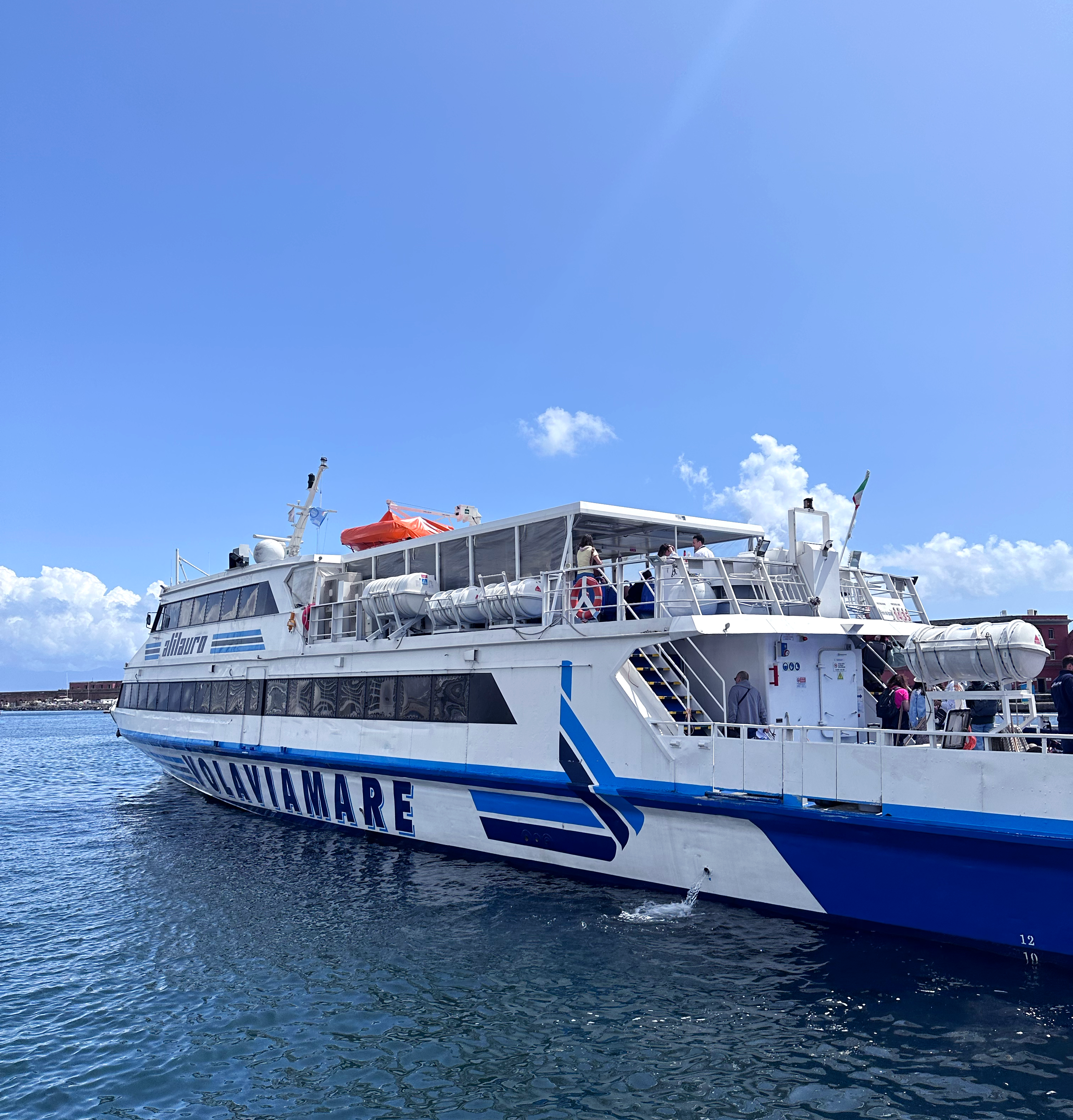
Fast vessels. Tight schedules. High fuel demand. In operations like these, every small decision at the helm has a direct cost. Not always visible in the moment, but it adds up over time, trip after trip. The question is how much can actually be saved without affecting operations.
To explore this, we worked with Alilauro Volaviamare SpA and their Giove Jet operating between Naples and Sorrento. This is a short, high-frequency route where timing is critical and delays are not an option. Instead of simulations, we ran a live test in real conditions to understand the real impact.
We compared two operating modes over six days. For three days, the vessel ran as usual. For the following three days, it operated using iHelm recommendations. The route, vessel, distance and timetable remained exactly the same. The only difference was how the vessel was operated
The result was clear. The vessel saved 30.7 litres of fuel per trip, corresponding to over 12% reduction in fuel consumption, with zero impact on arrival time. Without iHelm, the vessel consumed 248.2 litres per trip. With iHelm, this was reduced to 217.5 litres. No delays, no operational changes, just better decisions.
What changed was not the vessel or the route, but the behaviour. Before iHelm, the speed profile showed more aggressive patterns, with higher peaks and more variation throughout the trip. With iHelm, the vessel maintained a smoother and more consistent speed profile. Less variation leads to lower fuel consumption.
When these improvements are scaled across daily operations, the impact becomes significant. Across five trips per day, this corresponds to approximately 300 litres of fuel saved and around 880 kilograms of CO₂ reduced per day. Over the course of a year, this results in approximately 78,000 litres of fuel saved, €78,000 in cost savings, and 228,800 kilograms of CO₂ emissions avoided.
Fuel is not lost in one big mistake. It is lost in small variations over time. By improving consistency and supporting better decisions, these gaps can be reduced without affecting operations.
Your vessel is already generating the data. The question is whether you are acting on it.
To learn more about iHelm and how it supports vessel performance monitoring, visit our iHelm page.