Digital Twin Benefits for Maritime Fleets : Fuel, Maintenance, and Compliance in One Platform
December 4, 2025
Rising fuel prices, tightening IMO and EU ETS regulations, and the push toward decarbonization are exposing the limits of traditional vessel management. Digital Twin technology offers a practical alternative.
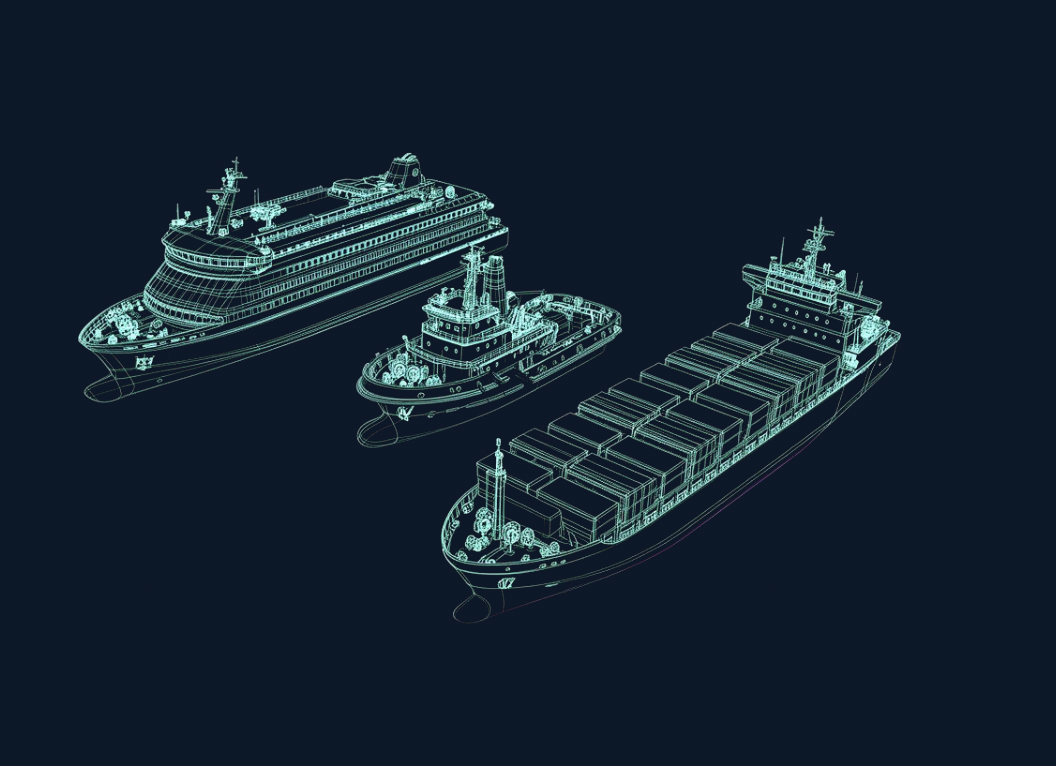
A Digital Twin is a real-time, data-driven virtual model of a vessel that mirrors its behavior and condition. By connecting sensor data, AI analytics, and simulation modeling, ship owners and fleet operators can predict maintenance needs, optimize fuel use, and ensure full compliance, before issues occur in the real world.
We translate digital twin benefits in maritime industry applications into measurable results: lower fuel use, fewer failures, and stronger regulatory readiness. For decision-makers aiming to modernize fleet operations, Digital Twins provide a proven path to higher efficiency and ROI. Cetasol’s iHelm Intelligent Platform makes this transformation practical, scalable, and directly aligned with sustainability goals.
What is a Digital Twin in the maritime context?
A Digital Twin is a dynamic, real-time virtual model of a vessel that mirrors its physical condition, systems, and performance. It’s not just a simulation, it’s a continuously evolving digital counterpart that reflects how a ship behaves in the real world.
By combining data from onboard sensors, IoT devices, and operational software, Digital Twins provide ship owners and fleet managers with an up-to-the-minute understanding of vessel health and performance.
Unlike static models, a Digital Twin learns and adapts as new data flows in. Every movement, vibration, temperature shift, and engine parameter is captured, analyzed, and visualized.
This gives operators the ability to monitor assets remotely, test “what-if” scenarios safely, and make confident decisions that improve efficiency, safety, and compliance.
Digital Twins now serve as essential tools for fleet optimization, predictive maintenance, and sustainability planning.
How Digital Twins Are Created and Updated
A Digital Twin represents not just a visual simulation, but a mathematically precise, continuously updated replica of a vessel’s condition and behavior.
It mirrors real-world processes, enabling operators to monitor, test, and optimize performance without taking the ship offline.
Let’s look at how a Digital Twin is built, kept up to date, and made intelligent through connected systems and data.
Data Collection and Modeling
The creation of a Digital Twin begins with data acquisition. Sensors and IoT devices across the vessel continuously record key metrics such as:
- Engine load and fuel consumption
- Propulsion and hull performance
- Navigational and route data
- Weather and sea-state conditions
- Power systems, cargo flow, and even captain behaviour
This data is transmitted to advanced cloud-based software models that replicate the ship’s physical and operational dynamics. The result is a high-fidelity digital counterpart, one that reacts exactly as the real vessel would under varying conditions.
Real-Time Synchronization and Context Awareness
Once the model is established, the Digital Twin must stay contextually aware and in sync with the physical vessel. This is achieved through:
IoT integration: Sensors, including AIS (Automatic Identification System), feed continuous live data to ensure the model reflects every system change in real time.
Cloud computing: The processing power required to update and analyze vessel data in real time depends on secure, high-performance cloud infrastructure. As Digital Twins expand to cover multiple assets and ports, scalable cloud systems become essential.
This live feedback loop allows operators to simulate voyages, test adjustments, and assess system behavior across a range of environmental and operational conditions , before applying them in real life.
Decision-Making and Continuous Improvement
A core goal of any Digital Twin system is to enable better, faster, data-driven decisions. Once connected to AI and machine learning systems, the model gains predictive and adaptive capabilities that go beyond monitoring:
- Machine learning allows the twin to improve over time by recognizing performance trends and refining its simulations.
- AI integration supports predictive maintenance, voyage optimization, and real-time decision-making that minimizes human error and operational risk.
By combining these layers, world modeling, context awareness, and intelligent decision support, the Digital Twin becomes an essential tool for fleet optimization, regulatory readiness, and long-term ROI.
AI Integration for Predictive Accuracy
Artificial Intelligence amplifies the power of the Digital Twin, turning it from a data visualization tool into a predictive decision-making system.
The relationship between AI and Digital Twin technology is symbiotic: both thrive on data, but together they transform that data into tangible, high-value insights for vessel and fleet operations.
At its core, AI processes the vast amount of real-time information generated by Digital Twins, from engine metrics and weather conditions to fuel flow and navigational behavior. It identifies complex patterns that human operators might overlook, generating predictive insights that improve efficiency, reliability, and safety.
With this intelligence, fleets can anticipate failures, optimize routes, and reduce operational risk before issues materialize.
A major strength of AI in maritime operations is anomaly detection. By analyzing live data from Digital Twin models, AI systems can detect deviations in performance or behavior, such as unexpected changes in engine load, fuel consumption spikes, or non-compliance with standard operating procedures.
Once these anomalies are identified, the AI can automatically propose corrective actions, ensuring that adjustments are made in real time to maintain peak efficiency and safety standards.
AI also enriches the Digital Twin environment itself by layering new forms of data and context. For instance, AI-based situational awareness systems use advanced computer vision to capture visual and environmental data around the vessel.
When integrated into the Digital Twin, this visual intelligence enhances situational awareness, allowing for more accurate analysis, classification, and predictive modeling.
Over time, the AI learns from every voyage and scenario, refining its predictions and decision-making logic. The result is an adaptive maritime intelligence network, one that supports predictive maintenance, improves fuel performance, and drives measurable ROI across fleets.
Together, AI and Digital Twins are redefining how ships are monitored, managed, and optimized, creating smarter, safer, and more sustainable maritime operations.
What are the benefits of digital twins in the Maritime Industry?
By combining real-time data, simulation, and AI analytics, Digital Twins deliver measurable performance improvements for ship owners, engineers, and sustainability leaders.
Below are the key benefits driving adoption across the maritime industry.
Predictive Maintenance and Downtime Prevention
Digital Twins use predictive analytics and AI to anticipate equipment wear and system failures before they happen. This allows operators to schedule maintenance proactively rather than reactively, minimizing costly downtime and extending the lifespan of components.
Cetasol’s iHelm Intelligent Platform demonstrates how effective this can be. Users report notable maintenance cost savings and reduced operational disruptions through early fault detection, real-time monitoring, and access to ready-made operational reports.
These reports, available weekly, monthly, yearly, or on demand, provide detailed statistics and optional IMO-compliant summaries, giving fleet managers clear insight into performance trends and maintenance needs.
Voyage Optimization and Fuel Savings
By simulating various routes, weather conditions, and engine configurations, Digital Twins pinpoint the most fuel-efficient and environmentally responsible operating profiles for any voyage.
Through Cetasol’s iHelm, fleets have achieved 10–17% reductions in fuel use per voyage, while improving their Carbon Intensity Indicator (CII) ratings, directly supporting decarbonization goals and IMO compliance.
Real-Time Operational Awareness
A ship’s Digital Twin continuously monitors onboard systems, delivering instant alerts for anomalies above and below deck. This real-time awareness helps crews and operations centers make better decisions related to navigation, maneuvering, speed, maintenance, and energy management.
When combined with AI-driven anomaly detection, operators can act immediately on deviations such as unexpected fuel spikes, vibration irregularities, or compliance drift, all before they escalate into serious issues.
Compliance and ESG Impact
In today’s regulatory environment, sustainability is not optional, it’s a core performance metric. Digital Twins simplify environmental compliance by automating the measurement, reporting, and verification of emissions and energy use.
By tracking fuel consumption and load data in real time, operators can stay ahead of the IMO’s Carbon Intensity Indicator (CII) and the EU Emissions Trading System (ETS) requirements.
Fleet managers can benchmark vessel performance, plan retrofits, and generate auditable data to meet reporting obligations confidently.
To make fuel monitoring and compliance even easier, Cetasol developed CetaFuel, a virtual fuel reader that delivers precise, real-time data without the need for physical sensors. Affordable, reliable, and clog-free, it replaces traditional flow meters by virtually measuring fuel flow through a Digital Twin model of the engine, achieving 97–99.5% accuracy without complex installation.
Connected to the vessel’s engine, GPS, and onboard systems, CetaFuel delivers real-time insights into fuel use and efficiency. When paired with Cetasol’s iHelm Platform, it enables smarter fuel savings and fleet optimization.
Book a demo to see how CetaFuel can improve your fuel monitoring.
Enhanced Crew Decision Support and Operational Awareness
Cetasol’s Digital Twin operates entirely through data, not visual simulation. By continuously analyzing vessel performance in real time, it provides crews and operations teams with clear, data-based guidance on how the vessel is performing under current conditions.
Through integrated insights in the iHelm Captain Display, crews receive live recommendations on speed, routing, and power settings. This helps improve day-to-day efficiency and situational awareness without the need for additional training modules or visual interfaces.
This data-driven support helps bridge the gap between onboard action and fleet-level optimization, ensuring that every decision contributes to measurable performance gains and regulatory compliance.
Design, Retrofitting, and Equipment Testing
Shipbuilders and engineers use Digital Twins to simulate new designs or retrofit options before construction begins. This makes it possible to test and compare propeller types, hull forms, or energy systems digitally, saving time and material costs while predicting real-world performance outcomes.
For existing vessels, Digital Twins can model potential upgrades, such as alternative fuels or hybrid propulsion systems, to forecast ROI and environmental benefits before committing to physical changes.
Energy and Emissions Optimization
With growing attention on decarbonization, Digital Twins are vital tools for energy management. They monitor fuel efficiency, identify inefficiencies, and recommend operational adjustments to reduce CO₂ output and fuel waste.
Through adaptive AI integration, vessels can generate voyage-specific recommendations that highlight where energy consumption can be reduced without affecting performance, directly contributing to lower emissions and cost savings.
ROI and Strategic Value
The main driver behind Digital Twin adoption is return on investment. While setup requires an initial investment in sensors and software, the payback is clear and measurable.
Digital Twins improve fuel and energy efficiency by analyzing operational data and recommending more cost-effective, eco-friendly settings. They also help vessels stay compliant with environmental standards, avoiding penalties and improving sustainability scores.
Their predictive capabilities enable early detection of malfunctions, cutting down on unplanned maintenance, voyage delays, and repair expenses.
Continuous monitoring extends the lifespan of assets like engines and hulls, as crews can act early against corrosion or structural wear.
Even ports benefit. Digital Twin–driven port operations reduce congestion, shorten turnaround times, and improve berth and cargo handling efficiency, all of which save time and money.
Conclusion
Digital Twin technology is no longer a futuristic idea, it’s a practical solution driving real efficiency, sustainability, and profitability across modern fleets. From predictive maintenance to emissions tracking, its impact spans every level of maritime operations.
Cetasol’s iHelm platform makes this transformation scalable and actionable. By combining real-time vessel replication, adaptive AI, and cloud-based analytics, it empowers operators to make faster, smarter, and more sustainable decisions with measurable ROI.
Book a demo to see how Cetasol helps fleets reduce fuel costs, improve uptime, and future-proof operations for the next era of intelligent maritime management.