
Effective AI Adoption at Sea: Crew Training & Change Management Guide
January 31, 2026
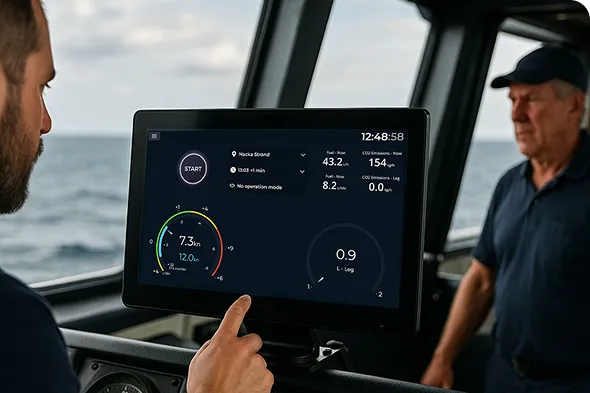
Rising fuel costs, emissions pressure, and evolving regulations are pushing more fleets toward AI-assisted decision support. The technology is ready, but adoption still stalls more often than it should.
The reason is rarely the software. It is crew trust, training gaps, and poor change management.
To ground the discussion, a few key terms matter:
Crew Training for AI: Preparing seafarers to understand and apply AI insights safely.
Change Management: Ensuring crews adopt new workflows through communication, leadership, and structured support.
Decision Support System: AI that assists, not replaces, human decision-making.
Dashboard Usability: How easily crews can interpret and act on alerts and recommendations.
Cetasol’s iHelm is designed with this reality in mind. It provides AI-based decision support built for humans in the loop, offering clear, real-time guidance without removing operator control.
Why Crew Training Is Essential for AI Integration
Effective AI adoption in maritime operations depends on how well crews understand, trust, and apply the recommendations generated by decision support systems. Even the most advanced tools deliver limited value if the people using them are unsure when or how to act on their insights.
AI as Decision Support, Not Autopilot
AI-driven platforms such as Cetasol’s iHelm are designed to assist, not replace, the captain and crew. The system analyzes real-time vessel data and recommends appropriate speed, power, or operational options for crew consideration.
Training is critical so crews understand:
- What the AI is doing: analyzing data patterns, generating recommended actions.
- What it is not doing: taking autonomous control or overriding human judgment.
This clarity prevents two common risks:
Over-reliance, where crews assume the system will “take care of it.”
Distrust, where operators ignore insights they do not understand.
When crews know how and why AI recommendations are generated, they can confidently integrate them into daily decision-making.
Linking Training to Safety, Fuel, and Compliance
Well-trained crews use AI insights to improve tangible outcomes. With iHelm, this includes:
- Safer maneuvering through more stable speed profiles and better situational awareness.
- Lower fuel consumption, where operators have observed fuel-consumption reductions in the 10–17% range in documented deployments, depending on vessel type and operating conditions
- Smoother compliance workflows, with clearer fuel and emissions data available for MRV and CII reporting.
The technology provides the analysis, but the crew’s knowledge determines whether savings and safety improvements actually materialize.
From Data Noise to Actionable Insights
Without proper onboarding, AI dashboards can feel like a flood of information, new metrics, alerts, and trend lines that add pressure rather than clarity.
Training helps crews understand:
- Which KPIs matter during transit versus maneuvering.
- How to interpret real-time alerts.
- When to adjust speed or power to align with recommended targets.
The result is a shift from “too much data” to actionable guidance. When crews know what each insight means and when it matters, AI becomes a practical decision support tool rather than an extra screen on the bridge.
AI succeeds onboard when crews are trained, supported, and involved. Effective adoption requires structured crew training and strong change management, not just installing a new system.
Key Barriers to AI Adoption Onboard
Effective change management for shipping begins by acknowledging the real obstacles crews and operators face when new AI systems are introduced. These challenges are not just technical, they are cultural, operational, and human.
Understanding them upfront allows fleets to design training and rollout plans that minimize resistance and maximize value.
Fear of Replacement and Loss of Expertise
One of the most common concerns at sea is that AI might replace human judgment.
Seafarers often worry that technology will undermine the value of their experience or reduce their role on the bridge or in the engine room.
In reality, adaptive AI solutions like Cetasol’s iHelm are built to learn from captains, not against them. iHelm observes operational patterns, vessel behavior, and historical voyages to provide recommendations that complement a captain’s expertise. The system does not take control or make autonomous decisions; it enhances situational awareness and supports safer, more efficient operations.
Without clear communication and training, these misunderstandings can slow down AI adoption. When crews understand that AI strengthens, not replaces, their role, trust increases and resistance decreases.
Digital Literacy Gaps and Cognitive Overload
AI tools introduce new digital interfaces, alerts, and KPIs. But crews differ widely in their comfort with digital technology. Some officers have grown up using data-rich screens; others have spent decades relying on manual logs and traditional instrumentation.
This creates two risks:
- Digital literacy gaps, where crew members lack confidence using new dashboards.
- Cognitive overload, where too many metrics or alerts create confusion rather than clarity.
If not addressed, these issues can turn AI systems into “another screen” rather than a practical decision-making aid. Effective training and user-friendly design, clear visual layers, consistent terminology, and intuitive operational modes, are essential to making the technology accessible for all ranks and age groups.
Fragmented Systems and Inconsistent Workflows
Maritime operations are highly fragmented. Different vessels, even within the same fleet, often run on:
- Non-standardized equipment
- Older legacy systems
- Various data sources and sensor setups
This fragmentation makes one-size-fits-all training ineffective. Crews may face inconsistent workflows across vessels, leading to uncertainty when interacting with AI tools.
Because AI relies on accurate, consistent data streams, poor data quality or incomplete integration slows down adoption and limits the value of insights. The industry’s broader challenge, lack of shared standards, limited reliable information, and inconsistent data practices, also contributes to slow uptake.
On top of this, shipping companies often lack a clear, long-term digitalization strategy.
Without a step-by-step roadmap, teams struggle to align around roles, responsibilities, and expectations for AI use.
Poor Data Quality and Lack of Reliable Information
AI is only as strong as the data feeding it. The shipping industry still struggles with:
- Inconsistent data formats
- Limited standardized protocols
- Reluctance to share performance data across the supply chain
Data issues undermine AI because:
- Insights lose accuracy
- Predictive models fail to generalize
- Crews lose trust in recommendations
Improving data consistency and reliability is essential for successful AI deployment.
Time, Energy, and Resource Limitations
Digital transformation requires crew time for training and superintendent time for analysis.
Many operators already run tight schedules. Introducing AI without allocating resources creates rollout fatigue. This is especially common in smaller companies without dedicated digital units.
Lack of a Clear Digitalization Strategy
When shipping companies treat AI adoption as a one-off project instead of a long-term strategic transition:
- Crews receive incomplete or inconsistent training.
- Systems are deployed without clear performance goals.
- Resistance grows because operators don’t understand the purpose or expected outcomes.
Step-by-step planning and communication form the foundation of any successful change management approach.
Evolving Skill Requirements
Working with AI requires new competencies:
- Understanding data-driven recommendations
- Interpreting alerts and trend patterns
- Communicating insights between crew and shore
Without structured skill development, even the best AI tools remain underused.
Principles of Effective Change Management in Maritime Settings
Successful change management for AI adoption in maritime operation requires more than installing an AI platform, it demands a structured, human-centered approach.
Crews must understand why the change is happening, see leadership using the tools, and feel supported throughout the transition.
Start with Why: Clear Business and Safety Rationale
Before any training or installation, crews need to understand why AI is being introduced.
Clear communication around the purpose of adoption reduces resistance and builds trust.
The rationale should be simple and concrete:
- Fuel savings: measurable reductions that directly impact operational costs.
- Emission reduction: supporting CII, MRV, and sustainability goals.
- Fewer incidents: more stable and predictable operations.
- Simplified reporting: automated data capture reduces administrative burden.
When crews see that AI tools like iHelm help them work safer and more efficiently, not replace their judgment, they are far more likely to engage with the system.
Leadership Buy-In and Visible Sponsorship
Change sticks when leadership models the behavior expected of the crew. Masters, fleet managers, and technical superintendents must actively use AI insights in their own workflows.
Practical examples include:
- Reviewing iHelm voyage reports during debriefs.
- Using fuel-saving recommendations in operational planning.
- Highlighting successful use of alerts or speed guidance during crew meetings.
When leaders demonstrate confidence in AI-assisted decision support, it signals that the technology matters and that using it is part of standard professional practice.
Champions, Feedback Loops, and Iteration
Identifying a small group of motivated early adopters, your “AI champions” can accelerate acceptance across the vessel or fleet. These champions:
- Help peers understand dashboards and alerts.
- Share best practices and operational insights.
- Reduce the intimidation factor for less tech-confident crew members.
Equally important are structured feedback loops. Regular check-ins should capture:
- Which dashboard elements are clear or confusing.
- How crews interpret real-time alerts.
- What training gaps still exist.
With this input, Cetasol acts as a technology partner, adjusting system setups and training materials as crews share what works and what needs improvement. This iterative approach ensures the system evolves with the operation, not the other way around.
Progressive Rollout Instead of Big Bang
A phased deployment significantly increases the likelihood of successful AI adoption.
Instead of introducing the system across the entire fleet at once, operators can:
- Start with a pilot vessel or a few captains.
- Test the system on a specific route or type of operation (e.g., ferry transit, CTV transfers, towing).
- Measure early results and refine training or configurations.
Once crews gain familiarity and trust, and once measurable benefits appear, scaling across additional vessels becomes smoother and faster.
A progressive rollout transforms AI adoption from a disruptive event into a predictable, manageable transition that builds confidence step by step.
Designing User-Friendly AI Dashboards for Crew
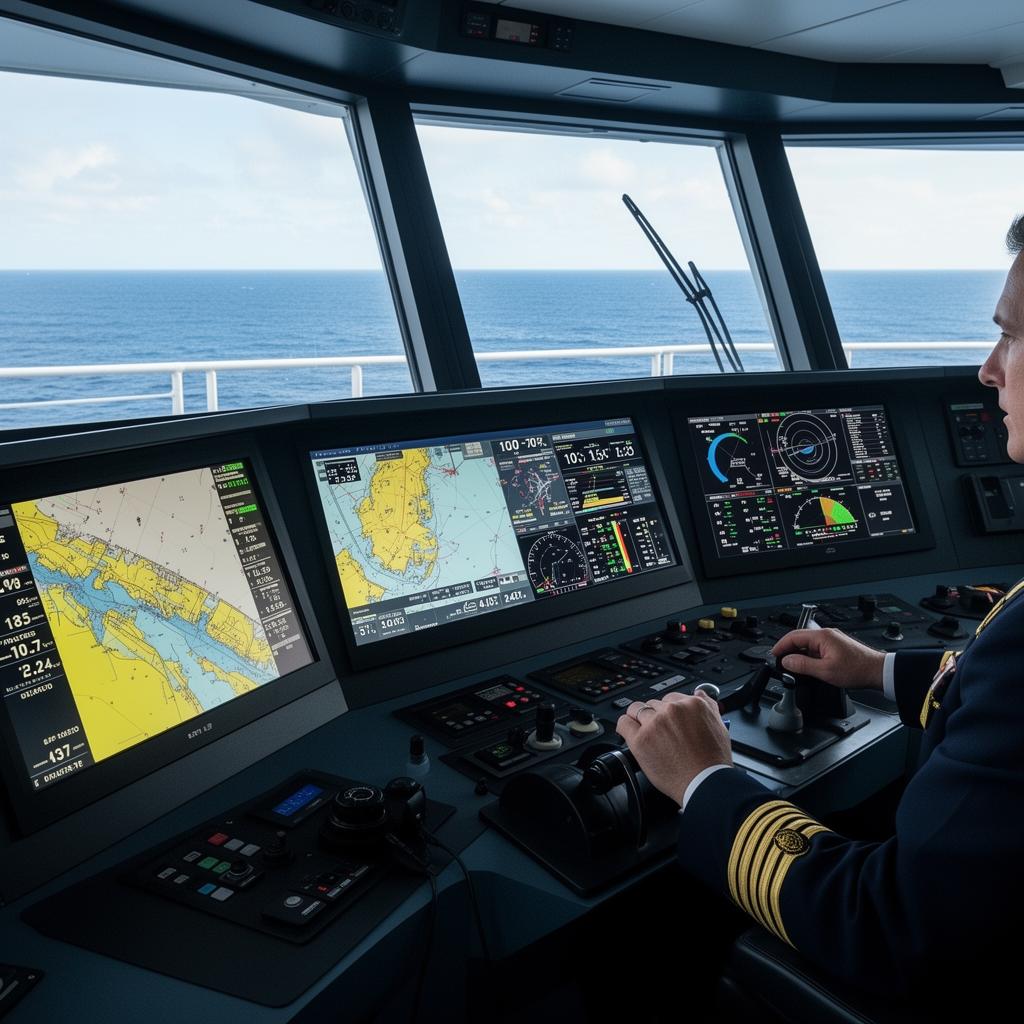
Strong dashboard usability is essential for AI adoption onboard. Crews must be able to interpret insights quickly and confidently, especially under operational pressure.
iHelm is designed around this need, offering clear, intuitive interfaces that fit naturally into existing bridge workflows.
Aligning with Existing Decision Flows on the Bridge
iHelm mirrors how captains already make decisions, balancing speed, ETA, fuel use, and safety margins. By integrating familiar concepts into its display, the system enhances rather than disrupts routine operations.
For example, when a target arrival time is set, iHelm recommends a speed profile that avoids overspeeding while maintaining punctuality. Fuel deviations caused by weather or load changes are highlighted simply and clearly, helping crews make informed decisions without sifting through raw data.
Visual Layers and Simplified KPIs
A layered interface ensures crews get essential information instantly while allowing deeper exploration when needed. The top layer uses straightforward gauges and colour-coded states while more detailed voyage trends and KPIs sit in the background for superintendents or post-voyage review.
Plain language, minimal jargon, and consistent colour cues keep the dashboard accessible to users with different digital literacy levels, improving clarity across the fleet.
Reducing Cognitive Load During Critical Operations
During high-pressure tasks, such as docking, towing, or pilot boarding, crews cannot afford distractions. iHelm reduces cognitive load by limiting simultaneous alerts, prioritizing only what matters, and keeping screens uncluttered during critical manoeuvres.
Its operational modes adapt the interface to the task at hand, ensuring crews see only the information relevant to their immediate operation. This focused design supports safer, more confident decision-making in demanding conditions.
How Training Transforms Real-Time Alerts into Actionable Decisions
AI-driven decision support is most effective when crews know how to interpret and act on real-time alerts with confidence. Training plays a central role in ensuring that alerts become meaningful guidance, not distractions, during daily operations.
Teaching Crews How to Read and Prioritize Alerts
Not all alerts demand the same level of response. Some are advisory, offering suggestions for improved efficiency, while others are time-sensitive, signaling situations that require immediate attention.
Training should help crews understand:
- Severity: which alerts are critical vs. optional.
- Timing: when to act immediately and when an adjustment can wait.
- Context: how weather, load, routing, and vessel behavior influence the recommendation.
Closing the Loop: From Alert to Action to Feedback
Training should not end when a crew member leaves the classroom or completes onboarding. iHelm’s continuous data collection enables an ongoing feedback loop that strengthens learning over time.
Tools like the iHelm cloud dashboard allow crews and shore teams to:
- Review voyage logs and see when alerts appeared.
- Analyze how the crew responded and what operational outcomes followed.
- Identify patterns, both effective actions and areas for improvement.
These replay-based debriefs transform alerts into learning opportunities. By reviewing real scenarios, crews refine their interpretation skills, and shore managers can adjust training or workflows accordingly.
Through proper alert interpretation, guided training exercises and continuous feedback, crews develop the competence and confidence needed to fully leverage AI-driven decision support on every voyage.
Training Programs That Empower Crew and Improve Safety
Effective training seafarers for AI tools requires a structured approach that reflects how different roles interact with the technology, while also supporting continuous learning and motivation onboard. The goal is to ensure every crew member, from captain to engineer to shore-based analyst, can confidently use AI insights to improve safety, fuel efficiency, and operational consistency.
Training must be role-specific. Captains and navigators need to focus on real-time decisions: interpreting alerts, adjusting speed, managing ETA targets, and understanding how AI recommendations fit into established bridge routines.
Engineers require training centered on engine data, power trends, and recognizing early signs of inefficiency that AI surfaces.
Shore teams, by contrast, work with fleet-level analytics, compliance-oriented reporting, and benchmarking across vessels. Cetasol can support this structure with modular training sessions designed for each group’s daily responsibilities and decision-making needs. To keep adoption smooth, training should also include microlearning and onboard refreshers rather than long technical manuals. Short, scenario-based modules, such as how to act when a fuel-saving recommendation conflicts with schedule pressure, help crews connect AI insights to real-world situations.
Motivation is also critical. Positive feedback and light gamification help crews see the value of using AI tools. Scorecards, trend comparisons between voyages, or highlighting best-practice handling all encourage voluntary adoption without creating unhealthy competition.
Recognizing improvements in fuel efficiency, smoother maneuvers, or consistent use of AI recommendations reinforces the link between the technology and safer, more efficient operations.
When training is tailored, continuous, and motivating, crews not only understand the system, they trust it. This strengthens safety, reduces fuel consumption, and ensures AI becomes an integrated, dependable part of daily maritime operations.
The Road Ahead: Culture Shift and Continuous Learning
AI must be treated as a permanent operational partner, not a one-time installation. Tools like iHelm function as a decision-support layer that assists crews during daily operations, improving as they learn from real operational data.
Keeping models updated ensures recommendations stay reliable and aligned with actual vessel behavior.A long-term shift requires building a learning culture onboard and ashore.
Fleets should:
Review iHelm dashboards and voyage reports during safety meetings and debriefs.
Integrate AI insights into routine performance discussions.
Maintain ongoing training as new features, regulations, and operating conditions evolve.
For fleet managers and technical superintendents, the path forward is practical:
Audit digital literacy across crews to identify confidence and knowledge gaps.
Partner with Cetasol for role-based training, system configuration, and adoption analytics.
By embedding continuous learning into daily operations, fleets ensure AI remains trusted, effective, and central to safer, more efficient maritime performance.
Conclusion
AI adoption in maritime operations succeeds when it becomes a people-first initiative.
While iHelm interfaces directly with crews, CetaFuel supports backend fuel-related estimation that strengthens post-voyage analysis and reporting, but the real transformation happens when seafarers understand, trust, and actively use these systems in their daily workflow.
With the right training and change management, AI stops being another screen on the bridge and becomes a reliable operational partner that strengthens decision-making across the entire fleet.
Fleets that embrace structured training, user-friendly dashboards, and continuous learning will be the ones that lead the industry as digitalization accelerates. The future belongs to operators who combine human expertise with intelligent, adaptive tools. If you’re ready to take the next step, see how Cetasol’s iHelm Intelligent Platform and CetaFuel Virtual Fuel Reader can support your journey toward safer, more efficient, and more sustainable operations. Connect with Cetasol to begin a modernized training and unlock measurable performance gains across your fleet.