
AI-Driven Maritime Efficiency: Lower Costs, Lower Emissions
December 8, 2025
Artificial intelligence is changing the economics of modern shipping. For decades, fleet operators have relied on static voyage plans and manual adjustments to control fuel use, a process that leaves significant savings untapped.
Today, AI offers a continuous, data-driven alternative. By learning from vessel behavior, weather conditions, and operational data in real time, it delivers precise insights that translate directly into lower fuel consumption and emissions.
The maritime industry now sits at the intersection of cost control and environmental accountability. With fuel representing the largest share of operational expenses, and with carbon pricing frameworks such as the EU ETS and UK ETS tightening alongside regulatory systems like CII and MRV, efficiency is now expected; it is a core strategic requirement.
AI for fuel efficiency is not just about smarter technology. It is about giving decision-makers the confidence to operate leaner, greener fleets in a volatile market.
Why Fuel Efficiency Defines Profitability and Compliance
Fuel sits at the center of every maritime balance sheet. It drives routing decisions, voyage planning, and long-term strategy.
When a vessel operates inefficiently, the effects ripple far beyond the fuel bill, influencing maintenance schedules, asset value, and overall fleet profitability. Even small inefficiencies repeated across multiple voyages can compound into major financial losses.
The consequences also extend into the regulatory sphere. Excess fuel consumption raises emissions, which can lower a vessel’s Carbon Intensity Indicator (CII) rating and increase exposure under the EU Emissions Trading System (ETS). Over time, these inefficiencies strain compliance with IMO 2050 decarbonization goals, which demand significant reductions in greenhouse gas emissions across global fleets.
As a result, fuel efficiency now shapes both economic and environmental performance. Shipowners and operators that fail to optimize energy use risk higher costs, regulatory penalties, and diminished competitiveness in a market where sustainability has become a defining benchmark.
What “AI for Fuel Efficiency” Really Means in Maritime Industry
Artificial intelligence (AI) is transforming maritime fuel efficiency from a reactive process into a continuous, data-driven system of optimization.
By interpreting vast streams of real-time data from ships, weather systems, and ports, AI technologies enable vessels to operate with precision that traditional methods cannot match.
The shift is not simply technological, it represents a new operational paradigm where efficiency, sustainability, and profitability are tightly integrated.
The global maritime fuel efficiency AI market is projected to grow to USD 6.27 billion by 2033, driven by a 14.7% compound annual growth rate (CAGR). This surge reflects mounting pressures for cost control, stricter International Maritime Organization (IMO) emission targets, and the broader push for sustainable shipping.
From Manual Optimization to Intelligent Automation
Historically, fuel efficiency in maritime operations relied on manual route adjustments, mechanical upgrades, and captain experience.
Today, AI platforms automate these processes by analyzing performance data from sensors and integrating it with environmental variables such as sea conditions, engine health, and vessel load.
Machine learning models adapt dynamically, learning from every voyage to predict and recommend the most efficient operational parameters.
This automation removes guesswork, ensuring that ships maintain optimal fuel use regardless of changing conditions. As maritime companies digitize their fleets, AI is becoming the central nervous system of operations, constantly refining routes, engine settings, and power usage to save fuel and cut emissions.
The result is a shift from static decision-making to an intelligent ecosystem capable of self-optimization at scale.
Real-Time Route and Speed Optimization
Among AI’s most impactful applications is voyage optimization, the real-time calculation of the most efficient routes and speeds. Using data from onboard sensors, satellite systems, and weather forecasts, AI algorithms continuously assess variables such as wind, waves, and sea currents to minimize resistance and fuel burn.
When conditions shift, the system automatically recalculates the best course of action, adjusting engine output and speed to maintain efficiency.
This capability allows vessels to conserve energy even when navigating unpredictable seas.
AI also minimizes unnecessary detours and waiting times, reducing both voyage duration and total emissions. These systems directly support compliance with IMO 2050 decarbonization targets by ensuring that each journey operates at peak energy efficiency while meeting delivery schedules.
In an industry where even small efficiency gains can save millions, AI-driven route and speed optimization has become indispensable.
Data-Driven Insights and Predictive Maintenance
Fuel efficiency depends not only on how a ship moves but also on how well its systems perform. AI strengthens this link through predictive maintenance, a proactive approach that detects inefficiencies before they escalate into failures.
By analyzing data, AI models identify subtle anomalies that indicate wear or malfunction. These insights allow operators to schedule maintenance precisely when needed, preventing breakdowns and minimizing fuel waste caused by underperforming machinery.
Over time, machine learning algorithms refine these predictions, tailoring maintenance schedules to each vessel’s unique operating profile. This reduces downtime, lowers repair costs, and sustains peak engine efficiency.
Precision in Navigation and Hazard Avoidance
Navigation is another critical domain where AI delivers measurable gains in fuel efficiency. AI platforms demonstrate how intelligent hazard detection can directly reduce energy use.
These improvements stem from fewer extreme maneuvers, accelerations, abrupt course changes, or decelerations, that typically increase fuel burn.
AI-powered cameras and object-detection tools give crews early warnings of potential hazards, enabling smoother, more deliberate navigation.
This precision reduces both collision risk and fuel-intensive corrections.
Integration Across Fleet and Infrastructure
AI’s success in fuel management depends on the seamless integration of software, hardware, and services.
- Software platforms provide the analytical engine, processing data and delivering optimization recommendations.
- Hardware such as IoT sensors, flow meters, and edge computing devices collect and process operational data in real time.
- Supporting services, including consulting and training, ensure these systems are properly implemented and continually optimized.
This integrated model allows both large fleets and smaller operators to access the same intelligence tools. Cloud computing has been instrumental in this democratization, removing the need for heavy onboard IT infrastructure while enabling fleet-wide visibility and control.
The integration of these three layers allows AI solutions like Cetasol’s iHelm and CetaFuel to operate as seamless extensions of existing shipboard systems, not as add-ons, but as adaptive intelligence networks that evolve with every voyage.
A Transformative Shift in Maritime Operations
The adoption of AI for fuel efficiency marks a fundamental transformation in how maritime operations are conceived and executed. The industry is shifting from reactive, manual oversight to predictive and automated control.
With emerging technologies like digital twins and AIoT (Artificial Intelligence of Things), ships can now simulate voyage outcomes, forecast energy use, and minimize emissions before departure.
At the core of this transformation are three technological pillars:
Adaptive AI: Machine learning models that evolve with each voyage, dynamically analyzing data to recommend optimal vessel speed, power, and routing based on changing sea and weather conditions.
Digital Twins: Virtual replicas of ships and engines that simulate performance scenarios, allowing AI to test fuel-saving strategies safely before real-world deployment.
Predictive Analytics: Algorithms that anticipate maintenance needs, detect inefficiencies like hull fouling or poor trim, and prevent costly downtime.
This integration of simulation, prediction, and automation creates a continuous feedback loop of improvement across global fleets.
AI is no longer a niche enhancement but a strategic necessity, reshaping how shipping companies manage costs, ensure compliance, and pursue sustainability. By converting data into foresight, AI anchors the maritime sector’s evolution toward a future defined by intelligent efficiency and environmental accountability.
Beyond Efficiency: A Path to Decarbonization and Competitiveness
AI’s benefits extend beyond cost savings. Its predictive analytics support CII and MRV reporting automatically, while helping operators maintain compliance with certification frameworks such as EEXI.
By cutting fuel use, AI directly reduces CO₂ emissions, helping companies align with IMO 2050 decarbonization targets and reducing exposure to EU ETS carbon costs.
In parallel, data transparency from AI platforms strengthens stakeholder trust. Investors, regulators, and clients can all verify efficiency performance through verifiable, real-time metrics, turning sustainability from a liability into a competitive advantage.
How AI Optimizes Vessel Performance
Cetasol’s iHelm Intelligent Platform transforms vessel operations from static planning to dynamic, data-driven decision-making. Using adaptive algorithms and real-time insights, it optimizes every aspect of performance from speed and fuel use to maintenance and reporting across individual vessels and entire fleets.
Data Inputs: Sensors, GPS, and Weather
Every optimization begins with precision data.
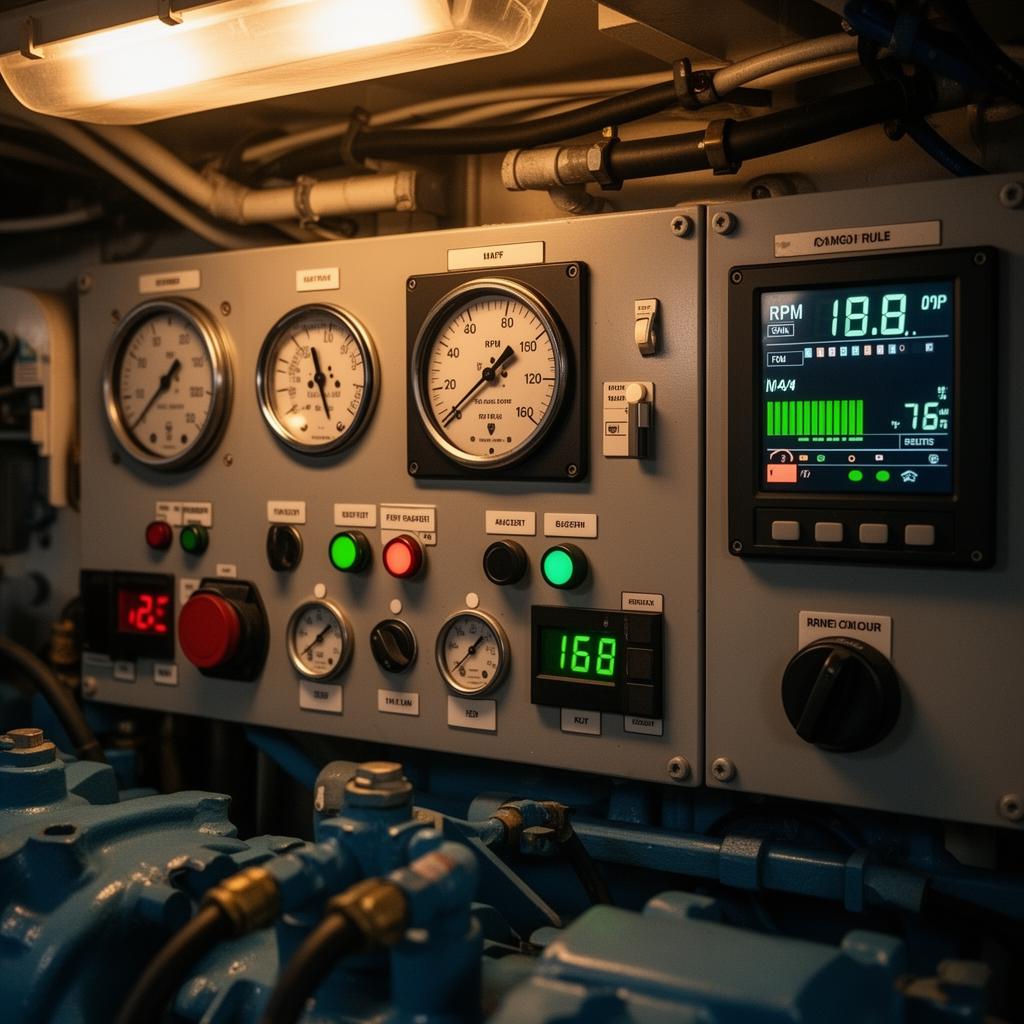
iHelm continuously gathers information from engine signals, GPS, weather systems, and onboard sensors, processing it through advanced AI models that understand how each vessel behaves under real-world conditions.
- Engine data: RPM and power load, which are used to calculate propulsion efficiency.
- Fuel data: Flow rate and virtual fuel readings (via CetaFuel).
- Environmental data: Wind, waves, and current patterns.
- Voyage metrics: Speed, route, and distance to destination.
By linking these data streams, iHelm identifies the most efficient operational parameters, ensuring ships move faster, cleaner, and smarter.
Real-Time Optimization with the Captain Display
Onboard, the Captain Display provides the crew with instant operational guidance.
- Speed Recommendation: Using data from GPS and weather feeds, iHelm calculates the most fuel-efficient speed for each leg of the voyage, helping captains reduce fuel consumption while maintaining schedule accuracy.
- Intelligent Speed and Fuel Gauges: Visual displays make efficiency intuitive, showing when the vessel is performing within optimal fuel and speed zones.
- Captain Analysis: Live voyage analytics give crews a clear understanding of how each adjustment affects energy use, enabling better real-time decisions at sea.
This continuous optimization loop ensures that crews always have actionable recommendations, not just data, to support measurable fuel savings and smoother navigation.
Digital Twin: The Virtual Model Behind Optimization
With Cetasol’s digital twin technology, iHelm builds a virtual replica of each vessel and its engine. This model mirrors real-time operations and predicts how changes in trim, load, or weather will affect performance.
For fleet managers, this digital twin capability allows optimization at scale , analyzing multiple ships simultaneously, identifying patterns, and applying proven strategies fleet-wide. It’s not just automation; it’s system-level intelligence that grows smarter with every voyage.
Reporting and Fleet Oversight
Efficiency doesn’t stop at sea. The iHelm cloud dashboard provides fleet-wide visibility and automated compliance documentation.
- Fleet Overview: See the real-time performance of all vessels in one place.
- Energy Monitoring: Track fuel and electrical consumption related to propulsion and key onboard systems.
- Automated Reporting: Generate detailed weekly, monthly, or yearly reports, including IMO-compliant summaries for regulatory requirements.
This data-driven transparency allows operators to verify performance gains, demonstrate sustainability impact, and continuously refine their operational strategy.
CetaFuel Integration: Virtual Fuel Monitoring
The CetaFuel module complements iHelm by virtually measuring fuel flow with 97-99.5% accuracy, eliminating the need for expensive and clog-prone physical sensors.
Its onboard Central Monitoring Unit (CMU) connects to the vessel’s engine and GPS, creating a digital twin of the fuel system. This enables affordable, maintenance-free fuel tracking, empowering operators with precise consumption data to support smarter decisions.
When combined with iHelm, CetaFuel creates a closed-loop optimization system that unites fuel monitoring, energy management, and fleet analytics for complete operational insight.
Cetasol’s AI-powered ecosystem gives shipowners the ability to reduce fuel costs, simplify compliance, and modernize operations, all through one intelligent platform.
Start optimizing your fleet today.
Explore iHelm Intelligent Platform
The ROI Perspective for Ship Owners and CFOs
In maritime operations, AI-driven fuel efficiency stands out as one of the few innovations that deliver both immediate and long-term returns. Unlike capital-intensive retrofits or fuel-type conversions, Cetasol’s Adaptive AI solutions require no major vessel modifications, enabling measurable impact from day one.
Immediate Payback: Typical ROI through verified 10–17% fuel savings. No major retrofits or hardware changes required. Scalable Savings: Efficiency gains multiply with fleet size and fuel price volatility, delivering stronger returns as operating costs rise.
Compliance Automation: Automated CII, MRV, and EU ETS reporting via iHelm’s dashboard reduces manual labor and audit costs.
Fleet-Wide Optimization: Digital twin data and cloud analytics allow best practices from one vessel to scale across the entire fleet.
Dual ROI, Cost and Carbon: Every ton of fuel saved lowers both operating expenses and CO₂ exposure, aligning financial performance with sustainability targets.
Future Outlook , AI and the Next Generation of Marine Fuels
As the industry transitions toward alternative energy sources such as LNG, methanol, ammonia, and hydrogen, artificial intelligence will remain central to optimizing performance and safety.
AI models already simulate how these fuels behave under different load, temperature, and engine configurations , helping shipowners test hybrid propulsion strategies before implementation.
Platforms like Cetasol’s iHelm are evolving alongside these energy shifts. By combining digital twin modeling with adaptiveAI, iHelm enables fleets to forecast fuel efficiency, emissions, and maintenance needs across diverse propulsion types.
This capability ensures that as the fuel landscape changes, operators can continue to make data-driven, compliant, and cost-efficient decisions.
Conclusion
AI is no longer a distant innovation, it is the present reality driving measurable results across global fleets. As rising fuel prices, tightening regulations, and decarbonization mandates reshape the maritime landscape, efficiency has become both a financial and environmental imperative.
Cetasol’s iHelm Intelligent Platform and CetaFuel Virtual Fuel Reader offer a proven, adaptive path forward. By combining real-time optimization, digital twin intelligence, and automated compliance reporting, they empower shipowners and operators to cut costs, reduce emissions, and future-proof their operations.
Fuel efficiency is not just about saving money, it’s about ensuring competitiveness in a rapidly changing industry. See what AI can do for your fleet today.
Book a Demo to experience how Cetasol turns intelligent data into sustainable performance.